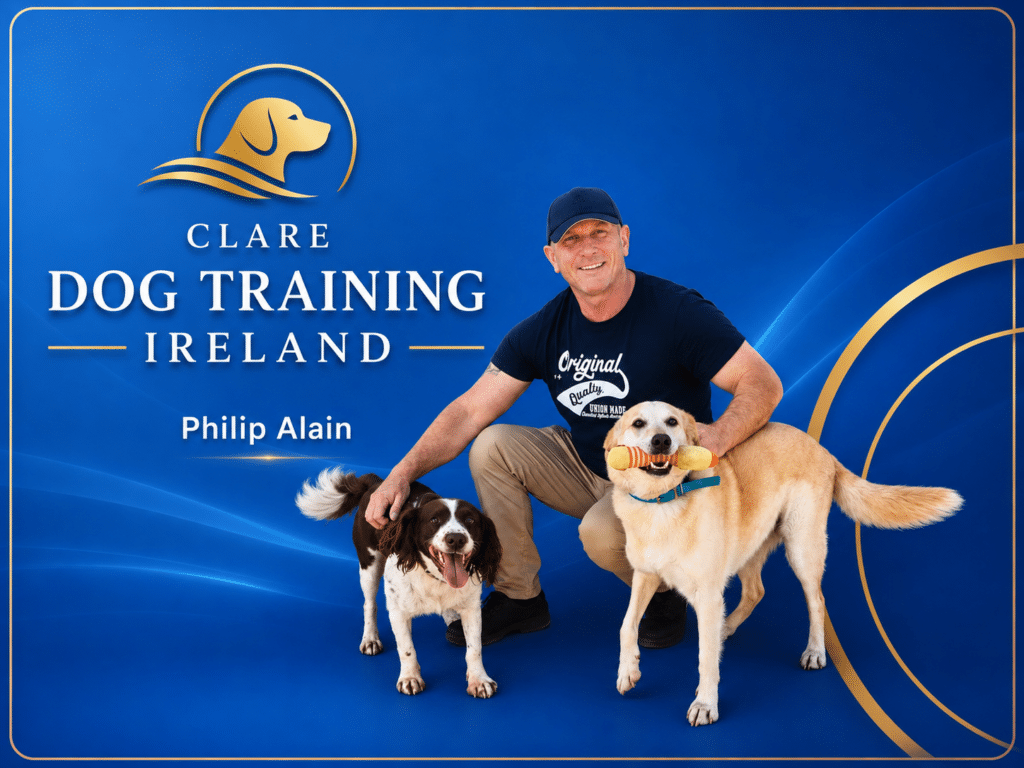
Dog Behaviourist Ireland
You did not get a dog to feel stressed, embarrassed, exhausted or constantly on edge.
You got a dog because you wanted companionship, connection, walks, family life, loyalty and the feeling of sharing your home with a dog you could enjoy. Somewhere along the way, life may have become harder than you expected.
The barking became exhausting. The walks became stressful. Visitors became a worry. The dog stopped listening. The house felt chaotic. You found yourself searching online at night, wondering what you were doing wrong.
The truth is, most owners are not doing everything wrong. Most owners are trying to raise a dog in a modern world that often makes very little sense to the dog.
Why Life With A Dog Can Start To Feel Hard
For many owners, the problem is not one single behaviour. It is the feeling that life with the dog has started to revolve around managing the dog.
The walk is not relaxing. Opening the front door is not simple. Visitors coming to the house becomes stressful. Leaving the dog alone becomes a worry. The dog follows, barks, pulls, jumps, guards, cries, chews, reacts or simply cannot settle.
That is usually the point where people start looking for a dog behaviourist.
Owners Feel Lost
Most owners are trying hard. They have read advice, watched videos, changed routines, tried equipment, asked friends and followed social media tips. The effort is there. The missing piece is usually clarity.
The Dog Has Learned A Pattern
Dogs repeat what works. If barking brings attention, barking grows. If pulling gets the dog forward, pulling grows. If guarding makes people move away, guarding can become stronger.
The House Starts To Change
People stop inviting visitors. Walks get shorter. Doors are managed. Children are told to stay away. The dog takes over more and more of the household without anyone meaning for that to happen.
The Owner Feels Judged
Many owners are embarrassed. They feel people are watching them, judging them or blaming them. That pressure makes the situation harder, especially when the owner genuinely loves the dog.
Behaviour Makes Sense When The Dog Makes Sense
A dog behaviourist should not simply label the dog, blame the owner or hand over a list of commands.
The real work is to understand why the behaviour makes sense to the dog. Once that is understood, the owner can stop guessing and start making better decisions.
The Behaviour Is Information
Barking, pulling, guarding, chewing, jumping, crying, growling or reacting tells us something. It does not tell us the dog is bad. It tells us there is a pattern that needs to be understood.
The Dog Is Doing What Works
If a behaviour has been repeated for weeks, months or years, there is a reason. The dog is getting something from it, avoiding something through it, or has never been shown a better way.
The Owner Needs Translation
Many owners are doing what feels natural to humans. Dogs do not live by human logic. They need clear routines, clear signals, clear boundaries and a way of living that makes sense to them.
The Home Is Part Of The Behaviour
The front window, the hallway, the sofa, the garden, the kitchen, the crate, the lead, the children, the visitors and the daily routine can all influence what the dog rehearses every day.
A Dog Behaviourist Is A Human-And-Dog Connector
The dog is living in a human world. The owner is trying to understand a dog. Somewhere between the two, confusion often develops.
A good behaviourist helps translate both sides. The dog needs to be understood as a dog. The owner needs clear, practical guidance they can actually follow inside the home.
Understanding The Dog
The dog must be looked at as a species first. Breed type, instincts, drives, development, age, emotional state, environment and learning history all matter.
Understanding The Owner
Most owners do not need judgement. They need someone to explain what is happening in plain English and show them what to do next.
Understanding The Household
Behaviour does not happen in a vacuum. A dog lives inside a system: doors, visitors, routines, rest, walks, feeding, family habits and daily expectations.
Building A Way Forward
The aim is not to make the dog look trained for one hour. The aim is to create a way of living that helps the dog and owner understand each other better every day.
The Modern Dog Dilemma
Dogs are living in a world that has changed faster than they have.
Many dogs are expected to behave calmly in busy homes, around visitors, traffic, children, windows, doorbells, livestock, other dogs and constant human activity, without ever being properly taught how to cope with that world.
The Dog Watching The World All Day
Some dogs spend hours looking through windows, reacting to people, dogs, cars, birds or movement. They are not relaxing. They are rehearsing alertness every day.
The Dog With No Job
Many dogs were bred to herd, retrieve, guard, hunt, track, carry or work with people. In modern homes, those instincts often have no proper outlet.
The Dog That Never Switches Off
Some dogs are constantly touched, spoken to, excited, followed, called, interrupted and entertained. They are tired, but they do not know how to rest.
The Dog With Too Much Freedom
Freedom without guidance can create confusion. Some dogs are given full access to everything before they have learned boundaries, independence or calm behaviour.
The Dog Expected To Look Pretty
Dogs are not ornaments in a house. They need purpose, recovery, structure, leadership, engagement and a meaningful place inside the family routine.
Breed Purpose Still Matters
Dogs are not all the same.
A Border Collie was not developed for the same work as a Labrador. A Terrier was not developed for the same work as a Cavalier. A German Shepherd was not developed for the same work as a toy breed. A Springer Spaniel was not bred to think and move like a Bulldog.
When owners are given the same advice for every dog, important details are missed.
Working Breeds
Working breeds often need more than exercise. They need direction, mental work, clear routines, controlled outlets and owners who understand why the dog is driven to do certain things.
Herding Breeds
Some herding breeds are sensitive to movement, pressure, noise and patterns. Without guidance, that awareness can turn into chasing, stalking, barking or fixation.
Terriers
Terriers can be determined, intense and quick to act. They often need structure, boundaries and outlets that respect their history instead of pretending those instincts do not exist.
Gundogs
Gundogs can be social, energetic and highly driven by scent, movement and retrieving. Without engagement and structure, that energy can become pulling, stealing or poor focus.
Guarding Breeds
Some breeds are naturally more aware of territory, visitors and the environment. These dogs need clear leadership and management so they do not feel responsible for the household.
Why Good Dogs End Up Struggling
Most behaviour problems do not appear overnight. They develop quietly through daily habits, missed foundations and repeated patterns.
Puppies Given Too Much Freedom
A puppy that has full access to the house before learning rest, toilet routine, crate routine, handling and boundaries can quickly become difficult to manage.
Adolescent Dogs With Weak Foundations
Adolescence often exposes what was missing earlier. Pulling, ignoring recall, jumping up, guarding, barking, frustration and conflict often become stronger at this stage.
Dogs With No Independence
Some dogs are loved so much that they are never taught how to be alone, how to settle away from people, or how to cope without constant attention.
Dogs Without Recovery
Walks, visitors, play, children, excitement, daycare, busy homes and constant access can leave some dogs permanently switched on.
Dogs Without Connection
Some dogs live beside their owners but do not truly work with them. There is affection, but not enough communication, engagement or guidance.
Behaviour Problems Are Often Misunderstood
Dogs are often called stubborn, dominant, bold, spoiled, jealous, overprotective or naughty when the real picture is more practical.
The dog may be confused, frightened, frustrated, overtired, over-stimulated, under-fulfilled, poorly managed, physically uncomfortable or simply repeating a behaviour that has worked before.
Misread As Disobedience
A dog that does not listen may not be choosing to ignore the owner. The dog may be overwhelmed, distracted, under-trained or unclear about what is expected.
Misread As Stubbornness
Many dogs are not stubborn. They have simply learned a different pattern, or the owner has not yet made the right behaviour clear enough.
Misread As Protection
A dog barking at visitors is not always protecting the owner. It may be worried, territorial, excited, rehearsed, confused or unsure what its role is.
Misread As Needing More Exercise
Some dogs do not need more mileage. They need better structure, calmer routines, more purposeful engagement and time to recover properly.
Misread As A Phase
Some puppy and adolescent behaviours are dismissed for too long. What starts as a small problem can become a strong habit if the foundations are not corrected.
Common Dog Behaviour Problems
The behaviour matters, but the reason behind the behaviour matters more.
A list of problems does not solve a dog. Understanding the dog, the owner, the environment and the daily pattern is where the work begins.
Puppy Biting & Mouthing
Puppy biting is often made worse by tiredness, over-handling, too much freedom, poor rest and a lack of structured engagement.
Adolescent Behaviour
Adolescent dogs often push through weak routines. Lead pulling, jumping up, ignoring recall, guarding, frustration and poor focus can all appear stronger.
Lead Reactivity
Barking or lunging on lead can come from fear, frustration, poor handling, distance problems, lack of engagement or a long history of rehearsed behaviour.
Aggression
Growling, snapping or biting must be taken seriously. Safety, management, assessment and owner understanding come before any training plan.
Separation-Related Behaviour
Dogs that bark, cry, panic, pace or destroy when left alone often need independence built into the daily routine, not constant reassurance.
Resource Guarding
Guarding food, toys, stolen items, furniture, rooms or people needs careful handling. The aim is to reduce conflict, not create more of it.
Excessive Barking
Barking can become a household pattern. Windows, gardens, doorbells, visitors, neighbours and noises can all keep the behaviour active.
Poor Settling
Some dogs never learn how to relax. They move from one stimulus to the next and need help learning recovery, independence and calm routine.
Destructive Behaviour
Chewing, digging, tearing and damage can be linked to boredom, stress, lack of supervision, separation problems, poor routine or unmet developmental needs.
Fixation & Repetitive Behaviour
Shadow chasing, light fixation, scanning, staring, window watching and repetitive patterns often need better management, outlet and redirection into healthier work.
The Philip Alain View Of Dog Behaviour
Behaviour is not the enemy. Behaviour is the information.
The dog is telling us something through the way it acts. The job is not to panic, label the dog, blame the owner or copy another online routine. The job is to understand what is happening and build the right foundation from there.
Understanding Before Training
Before changing behaviour, we must understand why it exists, what maintains it, and what the dog is learning from the situation.
Connection Before Control
A dog that understands and enjoys working with the owner is easier to guide than a dog being managed from one problem to the next.
Structure Before Freedom
Freedom without guidance often creates confusion. Structure gives the dog routine, predictability and fewer chances to rehearse unwanted behaviour.
Purpose Before Chaos
Many dogs need a job, an outlet and a reason to engage. Purpose can turn scattered energy into cooperation.
Recovery Before More Pressure
Some dogs do not need more stimulation. They need rest, calmer routines, boundaries and the ability to switch off.
Four Foundations Of Behaviour Work
When a dog is struggling, the answer is rarely one command, one tool or one trick.
The answer is usually found by bringing the dog and owner back to four foundations.
Understanding The Dog
Breed type, age, development, temperament, sensitivity, drive, history and emotional state must be understood before building the plan.
Connection & Communication
The owner must become relevant to the dog through food, play, movement, calm handling, timing, trust and meaningful interaction.
Structure & Management
Boundaries, routine, controlled access, crate routine, lead use, visitor management and clear household systems reduce confusion.
Recovery & Independence
Dogs need to learn how to settle, switch off, recover and spend time away from constant human attention.
When A Veterinary Check Matters
Not every behaviour problem is purely behavioural.
Pain, discomfort, illness, hormonal changes, sensory decline or sudden physical changes can influence how a dog behaves. A dog that suddenly becomes irritable, reactive, withdrawn, aggressive, restless or difficult to handle may need a veterinary check as part of the bigger picture.
This does not mean every behaviour problem is medical. It means responsible behaviour work should not ignore the possibility that the dog may be physically uncomfortable or struggling in ways the owner cannot see.
What Happens During A Behaviour Consultation?
The consultation takes place in the home because that is where the behaviour is living.
The hallway, kitchen, sitting room, garden, front door, car, window, lead walk, crate, sofa, children, visitors and daily routine often tell more truth than a training field ever could.
We Look At The Real Life
The dog is assessed inside the actual home routine. Where does the behaviour happen? What starts it? What keeps it going? What is the dog learning every day?
We Simplify The Problem
Owners are often drowning in advice. The first step is removing confusion and explaining the behaviour in plain English.
We Build A Practical Plan
The plan must fit the dog, the owner and the house. It should not be a performance that only works while the trainer is standing there.
The Owner Learns What To Do
My job is not simply to work with your dog. My job is to teach you how to become your dog’s trainer inside your own home.
Imagine Life Becoming Easier
Imagine walking your dog without constantly scanning ahead.
Imagine visitors arriving without the house turning chaotic.
Imagine your dog resting properly instead of watching every movement.
Imagine understanding why your dog behaves the way they do, and knowing what to do about it.
The aim is not perfection. The aim is a calmer dog, a clearer owner and a better relationship between the two.
Dog Behaviourist Ireland FAQs
What is a dog behaviourist?
A dog behaviourist looks at why behaviour is happening, not just what the dog is doing. The work involves understanding the dog, the owner, the home, the routine, the environment and the relationship between them.
What is the difference between dog training and behaviour work?
Dog training usually focuses on teaching responses such as recall, lead walking or settling. Behaviour work looks deeper at what is driving the behaviour and what needs to change in the dog’s environment, routine and owner handling.
Can puppy behaviour become adult behaviour?
Yes. Puppy biting, poor settling, jumping up, guarding, crying, stealing and lack of boundaries can become bigger adolescent or adult behaviour problems if the foundations are not put in place.
Why does my dog behave well sometimes and badly other times?
Dogs are affected by context. A dog may behave one way at home, another way on lead, another way with visitors and another way when tired, excited or overwhelmed. That is why the whole picture matters.
Does my dog need more exercise?
Sometimes more exercise helps, but many dogs need better structure, better rest, better engagement and clearer guidance more than they need more stimulation.
Can health or pain affect behaviour?
Yes. Pain, illness, discomfort or sudden physical changes can affect behaviour. Where behaviour changes suddenly or appears unusual, a veterinary check may be an important part of the process.
Do you work across Ireland?
Yes. Clare Dog Training Ireland provides private in-home dog behaviour and training support across Ireland.
In-Home Dog Behaviour Support Across Ireland
Private in-home behaviour consultations are available across Ireland, with location pages supporting major service areas.
Start With A Proper Conversation About Your Dog
If your dog is struggling, the first step is understanding what is happening, why it is happening, and what needs to change.