
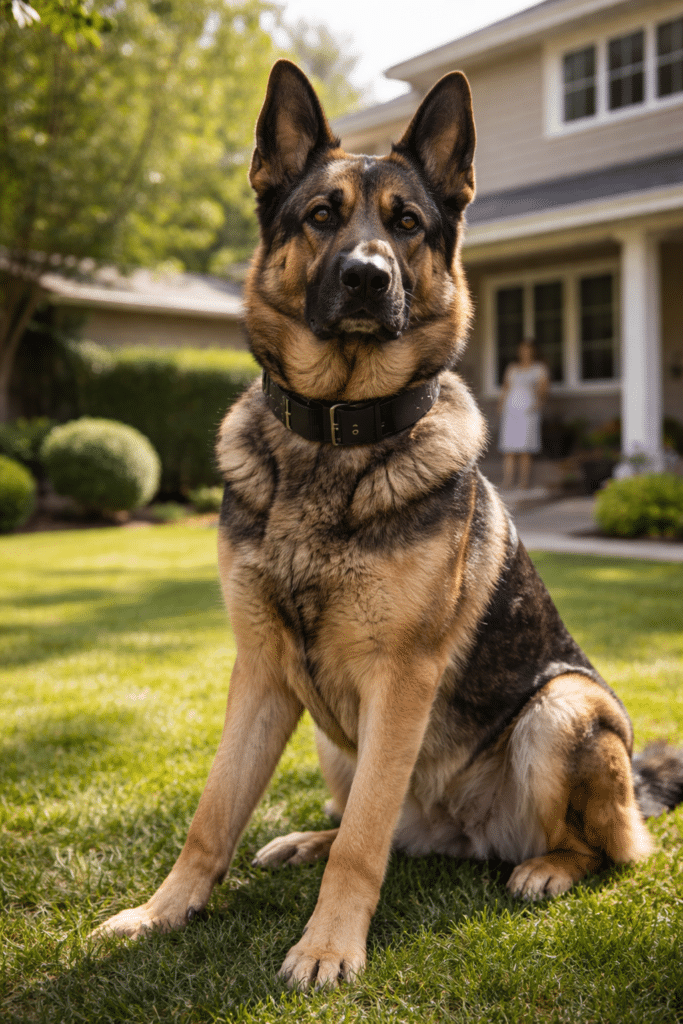
Across Ireland, the UK, and wider Europe, demand for family protection dogs, personal protection dogs, and so-called security dogs has increased sharply in recent years. What was once a specialist area of working dog deployment is now increasingly visible in civilian ownership, driven by concerns around personal safety, home security, and deterrence.
However, as demand grows, so does misunderstanding. In particular, the terms guard dog, security dog, and personal protection dog are often used interchangeably — despite representing very different roles, training standards, and levels of risk.
Guard Dogs and Personal Protection Dogs Are Not the Same
A guard dog is not a personal protection dog, and the difference matters.
A traditional guard dog is typically:
territorial by nature
protective of space rather than people
left to patrol or occupy an area
trained minimally, if at all
reliant on instinct rather than control
Guard dogs function primarily as deterrents. Their behaviour is driven by territorial instinct, not structured decision-making. Historically, guard dogs were used for perimeter security, yards, compounds, or remote property — often with limited human interaction and little requirement for social neutrality.
By contrast, a personal protection dog or family protection dog operates on an entirely different level.
What Defines a True Personal or Family Protection Dog
A properly developed personal protection dog is not aggressive, reactive, or unpredictable. In fact, the opposite is true. These dogs are selected and trained to be stable family dogs first, with protection as a controlled, secondary function.
Key characteristics include:
strong nerve stability
high environmental neutrality
clear thinking under pressure
precise discrimination between normal and threatening behaviour
reliable engagement and disengagement
calm, predictable behaviour within the family home
Elite personal protection dogs are given a job, not left to rely on instinct. Their responses are trained, contextual, and handler-directed. They are expected to live safely with children, visitors, and everyday household activity without escalation.
This level of reliability is not accidental. It is the product of genetics, early development, structured exposure, and expert handling over time.
Where the Risk Enters Civilian Ownership
Problems arise when dogs bred for security, guarding, or high-drive working roles are sold or positioned as family protection solutions without the necessary foundation or long-term management.
In many cases, dogs labelled as “protection dogs” are actually:
territorial guard-type dogs
poorly socialised working breeds
high-drive dogs placed into unsuitable family environments
animals expected to “switch on and off” without proper development
This creates a dangerous overlap between working dog genetics and inexperienced ownership, particularly in domestic settings where stability and predictability are essential.
Deterrence Is Not the Same as Safety
A dog that looks intimidating is not automatically a safe protection solution. In fact, unstructured territorial behaviour increases risk rather than reducing it.
A true family protection dog must be:
calm under normal conditions
socially neutral in public and at home
highly controllable at all times
mentally fulfilled through structured work
Without these elements, dogs intended as protection can become liabilities — not because of the dogs themselves, but because of misplacement and misunderstanding.
A Pattern Emerging Across Ireland, the UK, and Europe
Across Ireland, the UK, and Europe, dogs bred for serious working roles are increasingly entering the pet market under simplified labels such as guard dog or security dog. When the distinction between instinct-based guarding and trained personal protection is ignored, predictable outcomes follow:
behavioural instability
reactivity mislabelled as aggression
rehoming under false expectations
restrictions or destruction of dogs that were never appropriately placed
These outcomes represent systemic failures in education, placement, and expectation — not failures of the dogs.
Responsibility Must Match Capability
A personal protection dog is not an accessory, a status symbol, or a shortcut to safety. It is a high-responsibility working animal requiring appropriate selection, development, and long-term commitment.
As interest in family protection dogs, security dogs, and guard dogs continues to grow, the essential question is not demand — it is understanding.
Without clarity, the risks outweigh the benefits. With clarity, structure, and responsibility, protection dogs can exist safely and appropriately within civilian life.
Philip Alain
The Canine Report