
From Farm Utility and Catch Work to the Modern Pet World — Why the Original Bulldog Traits Never Truly Disappeared
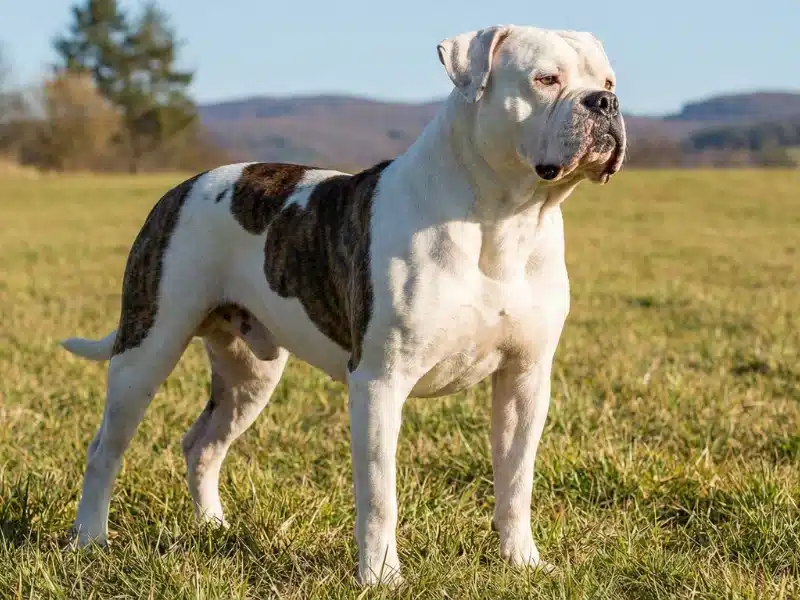
The American Bulldog is one of the most physically powerful working breeds still remaining within the modern dog world.
Broad-headed, muscular, athletic, driven, and intensely physical, the breed carries a level of natural strength and environmental presence that immediately separates it from many modern companion dogs. Yet despite its popularity within family homes, social media culture, and modern pet ownership, the American Bulldog was never originally developed as a casual household pet.
It was developed for work.
And understanding that history explains almost everything about the breed today.
Because beneath the modern pet image, the American Bulldog still carries many of the original behavioural and physical traits that made it valuable in the first place — power, endurance, grip strength, territorial awareness, confidence, persistence, environmental toughness, and the ability to physically control large animals under pressure.
Those traits did not disappear simply because the breed entered suburban life.
And this is where many modern ownership problems begin.
The Origins of the American Bulldog
The American Bulldog traces its roots back to old English bulldog-type dogs brought to North America by working-class settlers, farmers, and agricultural communities.
Unlike the heavily exaggerated English Bulldog seen today, these older bulldog types were functional working dogs bred for physical capability rather than appearance. They were used throughout farming environments for practical tasks including:
- catching livestock
- controlling cattle
- holding feral pigs
- property protection
- farm security
- and general utility work
The dogs needed athleticism, confidence, pain tolerance, environmental stability, and enough physical power to stop or hold difficult livestock when required.
In the rural southern United States particularly, these bulldog lines survived because they remained useful.
That distinction matters.
The American Bulldog did not primarily survive through show breeding or cosmetic breeding trends.
It survived through function.
A Breed Built Around Strength and Livestock Control
Historically, the American Bulldog became strongly associated with catch work — physically controlling difficult livestock, particularly feral hogs and cattle.
This required a very specific type of dog.
Not simply reactive or aggressive.
But committed.
A dog willing to move into physically demanding situations, maintain grip under pressure, absorb environmental intensity, and continue functioning despite noise, resistance, movement, and stress.
That type of work shaped the breed deeply.
It produced dogs with:
- high physical drive
- strong prey and chase instincts
- determination
- environmental confidence
- high arousal capability
- muscular endurance
- territorial awareness
- and naturally forceful engagement styles
These were not soft dogs designed around passivity.
They were utility dogs expected to operate physically within difficult environments.
And while modern ownership has changed the environment around the breed, the breed itself still retains much of that original foundation.
The Modern Pet World Often Misunderstands the Breed
One of the biggest mistakes in modern dog ownership is assuming that selective breeding completely removes historical function.
It does not.
The American Bulldog may now appear in family homes, urban environments, apartment settings, and social media content, but the behavioural systems underneath remain heavily influenced by the breed’s working origin.
This is why many American Bulldogs still display:
- high physical intensity
- strong pulling power
- environmental confidence
- frustration-based behaviour
- overexcitement
- territorial responses
- powerful play styles
- and high levels of physical engagement
These are not random behavioural accidents.
They are connected to the breed’s history.
The problem is that many owners now encounter these traits without fully understanding where they came from.
The dog enters the modern pet world carrying the instincts of a highly physical working animal while often being managed inside environments built around restraint, routine, limited outlets, and highly controlled social expectations.
That creates conflict.
American Bulldogs Around Other Dogs
The American Bulldog was never historically developed as a social park dog designed for unrestricted interaction with unfamiliar animals.
It was developed around work, livestock control, guarding ability, physicality, and environmental toughness.
That does not automatically make the breed dangerous.
But it does mean some individuals can display:
- strong environmental reactions
- assertive behaviour
- physical play escalation
- reduced social tolerance
- same-sex tension
- frustration on lead
- and high arousal around movement or stimulation
Inexperienced owners often mistake these behaviours as sudden problems appearing “out of nowhere”.
In reality, the traits were usually present genetically from the beginning.
What changes is that physical maturity eventually amplifies them.
A young puppy may appear soft, social, and manageable. But as the dog develops physically and hormonally, the original breed characteristics often become far more visible.
This is where modern ownership regularly becomes overwhelmed.
Because the dog becomes stronger faster than the owner develops understanding.
The Harness, Pulling, and Physical Power Problem
The American Bulldog also highlights one of the biggest contradictions in modern dog ownership.
Many owners place extremely powerful bulldog breeds into harnesses from puppyhood while allowing unrestricted pulling, environmental fixation, and constant forward drive during walks.
Historically, harnesses were developed specifically to increase pulling efficiency and physical workload capacity in working dogs.
The American Bulldog’s body structure is exceptionally effective at generating forward power through the chest and shoulders.
When pulling behaviour is repeatedly rehearsed through opposition pressure, environmental fixation, and constant forward movement without engagement, direction, or structure, the dog often becomes physically overwhelming very quickly.
Owners then describe the dog as:
- uncontrollable
- reactive
- stubborn
- overpowering
- or aggressive
But often, the dog has simply become highly conditioned towards drive, environmental loading, forward pressure, and behavioural rehearsal patterns that were unintentionally built from early development onward.
The breed’s physicality magnifies mistakes quickly.
The Difference Between Stability and Suppression
One of the biggest misunderstandings surrounding powerful working breeds is the belief that calm behaviour is achieved through suppression alone.
The American Bulldog does not generally stabilise through endless restriction, unmanaged frustration, or constant physical restraint.
Like many strong working breeds, the dog often requires:
- structure
- meaningful engagement
- environmental clarity
- controlled outlets
- consistency
- guidance
- and realistic understanding of the breed itself
Because the breed was historically built around purpose.
When powerful working dogs lose purpose entirely while remaining physically and psychologically driven, behavioural conflict often follows.
This is one reason modern bulldog ownership can become unstable.
The dog retains the hardware of a working animal while increasingly living within environments that provide very little meaningful outlet for the traits originally selected into the breed.
The Breed Is Not the Problem — Misunderstanding Is
The American Bulldog is neither a monster nor a casual beginner dog.
It is a serious physical breed with a serious working history.
At its best, the breed can be deeply loyal, stable, confident, affectionate with family, highly capable, environmentally tough, and exceptionally resilient. Properly managed American Bulldogs often become excellent working companions, family guardians, farm dogs, sporting dogs, and highly bonded household animals.
But none of that removes the reality of what the breed was originally designed to do.
And modern ownership increasingly struggles when breed history is ignored in favour of simplified social media narratives surrounding “just love”, “just socialise”, or “it’s all how they’re raised”.
Genetics matter.
Function matters.
Drive matters.
History matters.
And with breeds like the American Bulldog, those realities remain extremely visible.
Conclusion
The American Bulldog remains one of the clearest examples of a traditional working breed entering a modern pet world that often no longer fully understands the type of dog it is dealing with.
Behind the broad head, muscular frame, and modern popularity still sits a dog developed around physical work, livestock control, environmental resilience, and intense functional capability.
Those traits were never bred accidentally.
They were selected deliberately over generations because they served a purpose.
And while the modern world may have changed around the breed, the breed itself still carries much of that original design.
That is why understanding the American Bulldog matters.
Because powerful dogs do not become stable through denial of what they are.
They become stable through proper understanding of what they were originally built to be.
Philip Alain
The Canine Report