
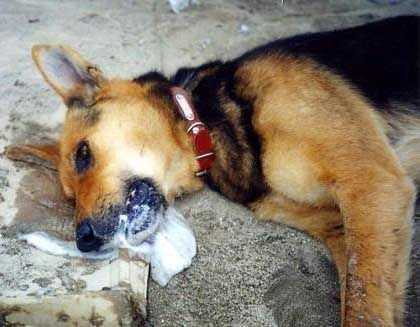
Recent reports from County Cork have highlighted a deeply disturbing reality for dog owners across Ireland: dogs deliberately poisoned after consuming food left in public areas. In the cases reported, sausages suspected to be laced with toxic substances were found in locations accessible to pets, resulting in serious harm and, in some instances, loss of life.
This is not an isolated incident, nor is it a new phenomenon. Similar cases are reported every year across Ireland, the UK, and Europe, often resurfacing quietly before fading from public attention. What makes these incidents particularly unsettling is not only the cruelty involved, but how easily they can occur in everyday environments where dogs are expected to be safe.
An Act That Goes Beyond “Anti-Dog” Behaviour
Poisoning animals is not a spontaneous act. It requires intent, planning, and a willingness to cause suffering. Whether motivated by annoyance over barking, resentment toward dog owners, personal grievance, or deeper antisocial behaviour, the act reflects a profound disregard for life.
Dogs do not understand boundaries imposed by human conflict. A poisoned bait does not discriminate between a noisy dog, a quiet dog, a family pet, or a working animal. It places every dog at risk — including puppies, elderly dogs, and animals walked responsibly on leads.
Why This Happens Closer to Home Than Many Realise
One of the most uncomfortable truths is that these acts rarely come from distant strangers. Historically, cases of deliberate animal poisoning are often traced back to individuals within the local community — people familiar with the area, its routines, and where dogs are walked.
That proximity is what makes these cases so alarming. Public green spaces, footpaths, housing estates, and rural lanes are shared environments. When they are weaponised, they become unsafe not just for animals, but for children and vulnerable people who could just as easily come into contact with contaminated food.
The Risk to Public Safety
Poisoned bait is not only an animal welfare issue — it is a public safety concern. Substances used to harm dogs can cause severe injury or death to humans if ingested or handled, particularly by children. The deliberate placement of toxic material in shared spaces crosses a line from cruelty into serious criminal behaviour.
A Pattern, Not an Anomaly
Animal welfare organisations and veterinary professionals consistently report that poisoning cases tend to spike in residential and semi-rural areas, often following complaints, disputes, or long-standing tensions. While not every case is linked to neighbour conflict, the pattern is well recognised.
What is rarely discussed is how silence and under-reporting allow this behaviour to persist. When incidents are dismissed as “unfortunate accidents” or treated as isolated, the opportunity to address the underlying risk is lost.
Vigilance Is Now a Necessity, Not an Option
Dog owners are increasingly being forced into a position where constant vigilance is required — scanning walking routes, avoiding certain areas, and restricting freedom to protect their dogs. While responsibility for these crimes lies entirely with those who commit them, the burden of prevention often falls unfairly on owners.
This is not a normal or acceptable situation.
A Line That Cannot Be Normalised
Deliberate poisoning of animals represents one of the most disturbing forms of antisocial behaviour. It reflects not inconvenience or frustration, but a conscious decision to harm. Communities should not accept it, excuse it, or grow numb to it.
These incidents demand awareness, reporting, and serious response — not only for the protection of dogs, but for the integrity and safety of shared public spaces.
What has happened in County Cork is a reminder: cruelty does not always announce itself loudly. Sometimes it is hidden in something as ordinary as food left on the ground — and that is precisely why it must be taken seriously.
Philip Alain
The Canine Report