
Dog Training Dublin
Premium one-to-one, in-home puppy training, dog training and behaviour support throughout Dublin, built around real dogs, real homes and the everyday situations owners are dealing with.
What Our Happy Clients Have to Say…
Dog Training and Behaviour Support Across Dublin
Every dog and household is different. Support is built around the dog’s age, temperament, history, genetics, home environment, family routine and the behaviour owners are managing in real life.
Puppy Raising and Early Development
Toilet training, crate routines, rest, play biting, chewing, household structure, confidence, engagement and the foundations required for long-term development.
Explore Puppy RaisingDog Behaviour Support
Professional assessment for reactivity, aggression, guarding, fear, anxiety, barking, growling, snapping and defensive behaviour.
Explore Behaviour GuidanceDogs, Babies and Family Safety
Preparing dogs for a new baby, managing access, routines, visitors, children, household movement and practical family safety.
Explore Family SafetyRescue Dog Rehabilitation
Structured support for rescue dogs adjusting to a new home, including confidence, routine, reactivity, boundaries and separation concerns.
Explore Rescue SupportReal Client Case Studies
See real examples involving complex dog behaviour, puppy integration, owner education and practical household change.
View Lucy and HarveyLiving With Dogs in Dublin
Dublin combines busy city streets, residential estates, apartment living, suburban family homes, coastal routes, public parks, traffic, visitors and highly stimulating walking environments.
Dogs need more than commands. They need the ability to remain manageable, connected and responsive when their environment becomes more stimulating.
Dublin City
Traffic, pedestrians, public transport, apartment living, shared spaces, narrow streets and constant environmental movement.
South Dublin
Family homes, residential estates, busy parks, school traffic, visitors and the need for practical everyday control.
West Dublin
Expanding residential areas, busy roads, public green spaces, housing estates and highly stimulating local walks.
North Dublin
Coastal routes, commuter towns, beaches, public parks, runners, bicycles, other dogs and changing levels of stimulation.
Family Homes and Apartments
Children, visitors, doorways, lifts, shared entrances, overexcitement, household freedom and the dog’s ability to rest and settle.
Puppy Training Dublin
Puppy training is not simply about teaching sit, paw or a handful of commands. Early development influences how a puppy settles, engages, accepts boundaries and learns to cope with normal family life.
Rest and Regulation
Overtired and overstimulated puppies can become increasingly bitey, destructive, restless and difficult to manage.
Household Structure
Freedom, feeding, rest, visitors, play, children, sleeping areas and daily routines all influence developing behaviour.
Play Biting and Chewing
Mouthing and biting must be considered alongside sleep, arousal, frustration, engagement and household management.
Confidence Development
Environmental experience should build confidence without flooding, overwhelming or creating unnecessary pressure.
Engagement Foundations
Building owner engagement early provides stronger foundations for recall, lead work and communication as the puppy matures.
Dog Behaviour Support in Dublin
Reactivity, aggression, guarding, anxiety, fear, barking, lunging, snapping and separation-related behaviour need to be assessed as complete patterns rather than treated as simple failures to obey commands.
Dog Reactivity
Barking, lunging, fixation, pulling or loss of control around dogs, people, runners, traffic, bicycles and movement.
Aggression and Defensive Behaviour
Growling, snapping, territorial behaviour and defensive responses requiring careful professional assessment.
Resource Guarding
Tension, growling or defensive behaviour around food, toys, furniture, resting areas or people.
Fear and Nervousness
Avoidance, shutdown, poor confidence, environmental sensitivity and difficulty coping with visitors or unfamiliar situations.
Separation Concerns
Overattachment, distress, barking, destruction or panic when access to the owner changes.
Real In-Home Training Results
These case studies show how structured in-home support can help owners understand the behaviour in front of them and create practical change within everyday family life.
Lucy and Harvey
A new puppy entered Harvey’s home, creating growling, snapping and uncertainty. With clearer structure and careful management, the relationship changed completely.
Read the Lucy and Harvey case study →Joey’s Behaviour Journey
Joey had become fixated on shadows and reflections and was no longer responding reliably to basic communication. Through structured in-home behaviour work, clearer routines and owner guidance, Joey developed stronger focus, engagement and everyday stability.
Read Joey’s behaviour case study →Dublin Dog Owner Guidance
Practical guidance for owners managing dogs and puppies within Dublin’s city homes, apartments, residential estates, coastal areas and busy suburban environments.
Busy Walks and Public Spaces
Dublin dogs require careful management around traffic, runners, bicycles, public parks, busy footpaths, other dogs and highly stimulating local walks.
Explore practical dog guidance →Preparing Dogs for Visitors
Visitor behaviour begins before the front door opens. Household structure, rest, management and controlled access all matter.
Visit the dog training FAQ →Puppies and Family Life
Puppies need rest, management, engagement and guidance rather than unlimited household access and constant stimulation.
Explore puppy development →How the Dublin Consultation Is Structured
Every consultation is shaped around the dog, the owner’s concerns, the behaviour history, the home environment, the daily routine and the situations in which the problem is actually occurring.
Home Assessment
Daily routines, access, rest, feeding, gardens, doorways, movement and visitor behaviour are considered together.
Behaviour Pattern
Triggers, history, temperament, confidence, arousal, handling and the circumstances surrounding the behaviour are reviewed.
Owner Handling
Practical communication and handling are developed around the situations the owner faces in everyday life.
Household Structure
The programme may include rest, crate use, feeding, visitors, gardens, children, other pets and walking routines.
Continuing Plan
Owners receive a clear structure to continue after the visit, based on the needs of their dog and household.
In-Home Dog Training Across Dublin
Clare Dog Training Ireland provides one-to-one puppy training, adult dog training and behaviour support in homes throughout Dublin City and County Dublin.
Dog Training Dublin FAQ
Do you provide dog training throughout Dublin?
Do you provide puppy training in Dublin?
Can you help with reactivity, growling or aggression?
Can you help with lead pulling and poor recall?
Do you work with rescue dogs?
Is the consultation carried out in my home?
Is support available after the consultation?
Dog Training Across Dublin and Surrounding Counties
Dog Training Wicklow
In-home puppy training, dog training and behaviour support throughout County Wicklow.
Visit Dog Training Wicklow →Dog Training Kildare
One-to-one in-home dog training and behaviour support throughout County Kildare.
Visit Dog Training Kildare →Nationwide Dog Training
Clare Dog Training Ireland provides one-to-one in-home dog training and behaviour support throughout Ireland.
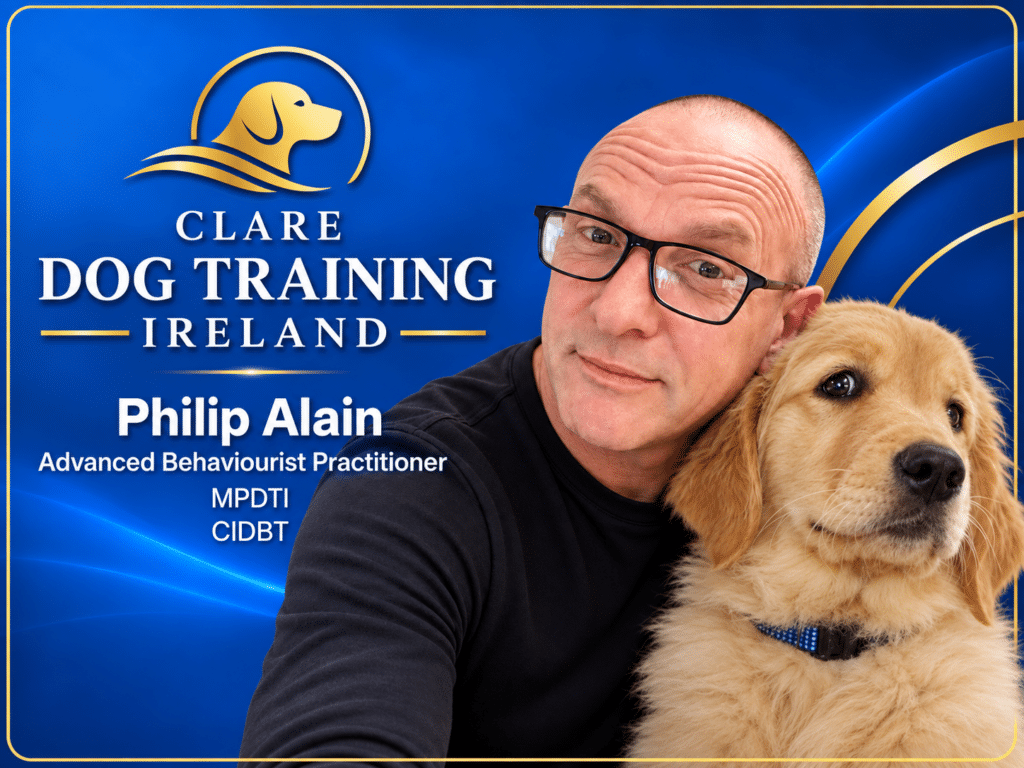
Explore Clare Dog Training Ireland →Written and Professionally Reviewed by Philip Alain
Philip Alain — Clare Dog Training Ireland
Advanced Dog Behaviourist Practitioner, Master Dog Training Instructor and specialist in puppy raising and early development, providing one-to-one in-home support throughout Ireland.
The Dublin service is based on practical assessment, owner education, household structure and training designed to work within real family life.
Learn more about Philip Alain →Need Help With Your Puppy or Dog?
If your dog is pulling on the lead, ignoring recall, reacting to dogs, barking, jumping up, guarding, showing anxiety, struggling to settle or becoming difficult to manage, the next step is to assess the behaviour properly.