
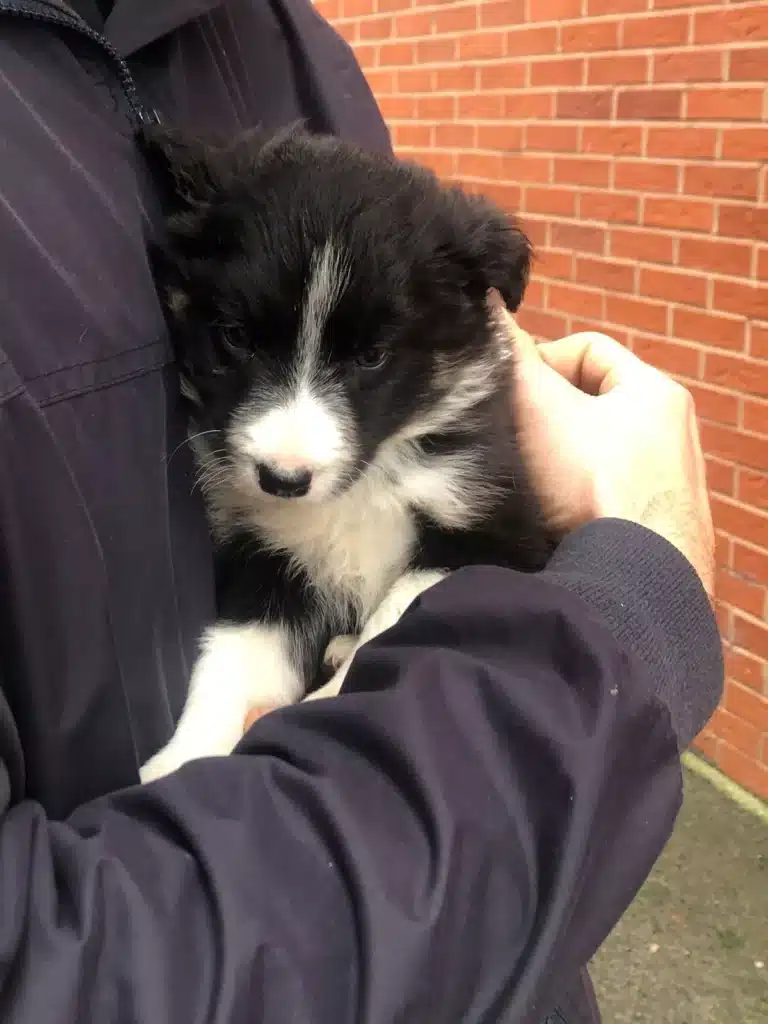
As the year comes to a close and households across Ireland celebrate New Year’s Eve, another quiet transition has already taken place. Puppies have arrived in homes across the country over the Christmas period—some planned, many impulsive, and a significant number brought in as presents.
For a small number of families, this will be the beginning of a well-managed and informed journey. For many others, it will mark the start of uncertainty—because the puppy arrived before the knowledge, the structure, or the understanding did.
This is not a rare occurrence. It happens every year. Christmas brings emotion, pressure, and good intentions. Puppies are purchased quickly, collected during a busy period, and placed into homes that have not been prepared for what a developing animal actually requires.
The Modern Puppy in a Human-Centric World
A puppy is not designed to be raised solely inside a house.
Yet the modern pet puppy is typically introduced straight into a fully human-centred environment—indoors, overstimulated, constantly handled, and expected to adapt immediately. There is often little consideration for gradual environmental exposure, controlled experiences, or teaching the puppy how to cope with the world beyond four walls.
Instead, the puppy’s world becomes limited: the kitchen, the sitting room, the utility, a dog bed. When the puppy explores, mouths, jumps, or becomes over-aroused, it is chastised for being “bold,” without ever being shown what behaviour is expected instead.
This is not defiance. It is lack of guidance.
Environmental Exposure Is Not Optional
A puppy’s early development depends on structured exposure to environments, surfaces, sounds, people, movement, and space. That exposure needs to be intentional, gradual, and managed—not accidental or overwhelming.
When puppies are confined largely to the home and suddenly taken out only after a second vaccination, the transition is often abrupt. A harness goes on, the front door opens, and the puppy is walked into busy environments with no preparation, no foundation work, and no structure.
Nothing is explained. Nothing is built progressively. The puppy is simply expected to cope.
For many dogs, this is where early stress patterns begin.
No Boundaries Creates Stress, Not Freedom
Inside the home, the absence of boundaries is often misunderstood as kindness. In reality, it creates confusion.
Many puppies are allowed constant access to people, movement, noise, and interaction. They are rarely encouraged to settle independently. They are rarely left alone, even briefly. There is no early independence, no calm separation, no opportunity to learn emotional regulation.
As a result, the puppy becomes dependent rather than confident.
Over time, this constant proximity creates dogs that struggle to cope when humans leave—even for short periods. What could have been prevented with early, gentle independence becomes separation-related distress later in life.
This is one of the most common and avoidable psychological issues seen in adult pet dogs.
When Developmental Needs Are Missed
None of this happens because people do not care. It happens because many owners simply do not know what puppies need in the early stages.
There is a gap between intention and understanding.
Without education, owners respond emotionally rather than developmentally. Puppies are corrected without clarity, restricted without guidance, and expected to behave without being taught how. Over time, frustration grows on both sides.
This is how puppies develop anxiety, reactivity, poor resilience, and long-term behavioural struggles that are later described as “temperament problems,” when in reality they are developmental consequences.
Help Is Often Sought Too Late
One of the most consistent patterns seen after the Christmas period is delay.
Many owners struggle quietly, hoping their puppy will grow out of issues. They feel unsure, overwhelmed, or embarrassed to ask for help. By the time guidance is finally sought, patterns are already established.
Early education could have prevented most of it.
An End-of-Year Reality Check
As we move into a new year, the reality remains unchanged:
many dogs struggle not because they are difficult, but because their early development was misunderstood.
Puppies need structure, boundaries, environmental exposure, and early independence. They need guidance, not constant correction. They need to be taught how to live in a human world—not simply placed into one and expected to cope.
Love alone is not enough.
What happens in the first weeks matters. What is allowed, ignored, or misunderstood shapes the dog that follows.
The puppy that arrived at Christmas will not stay a puppy for long.
What it becomes depends almost entirely on what happens next.
The Canine Report
by Philip Alain