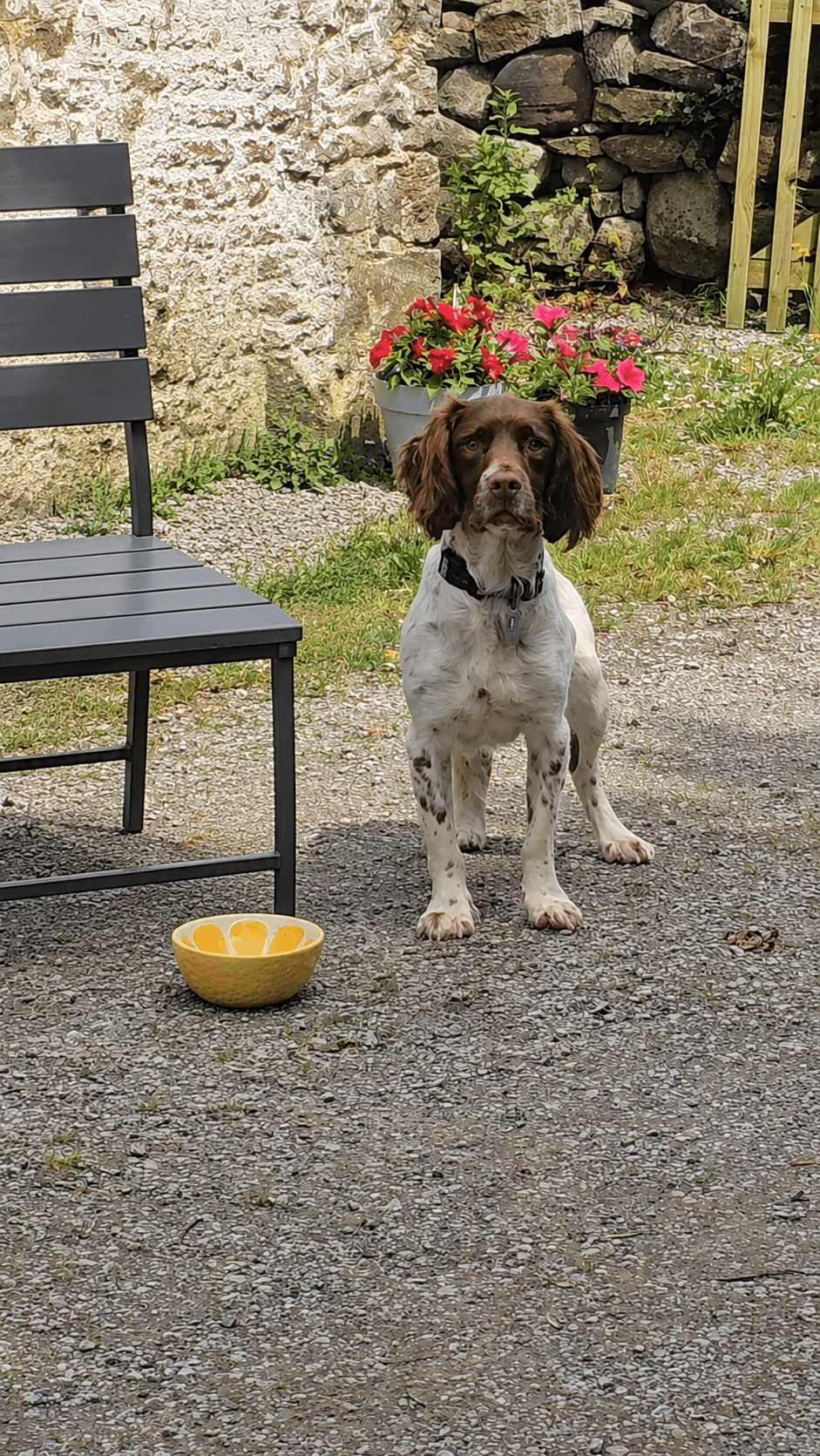
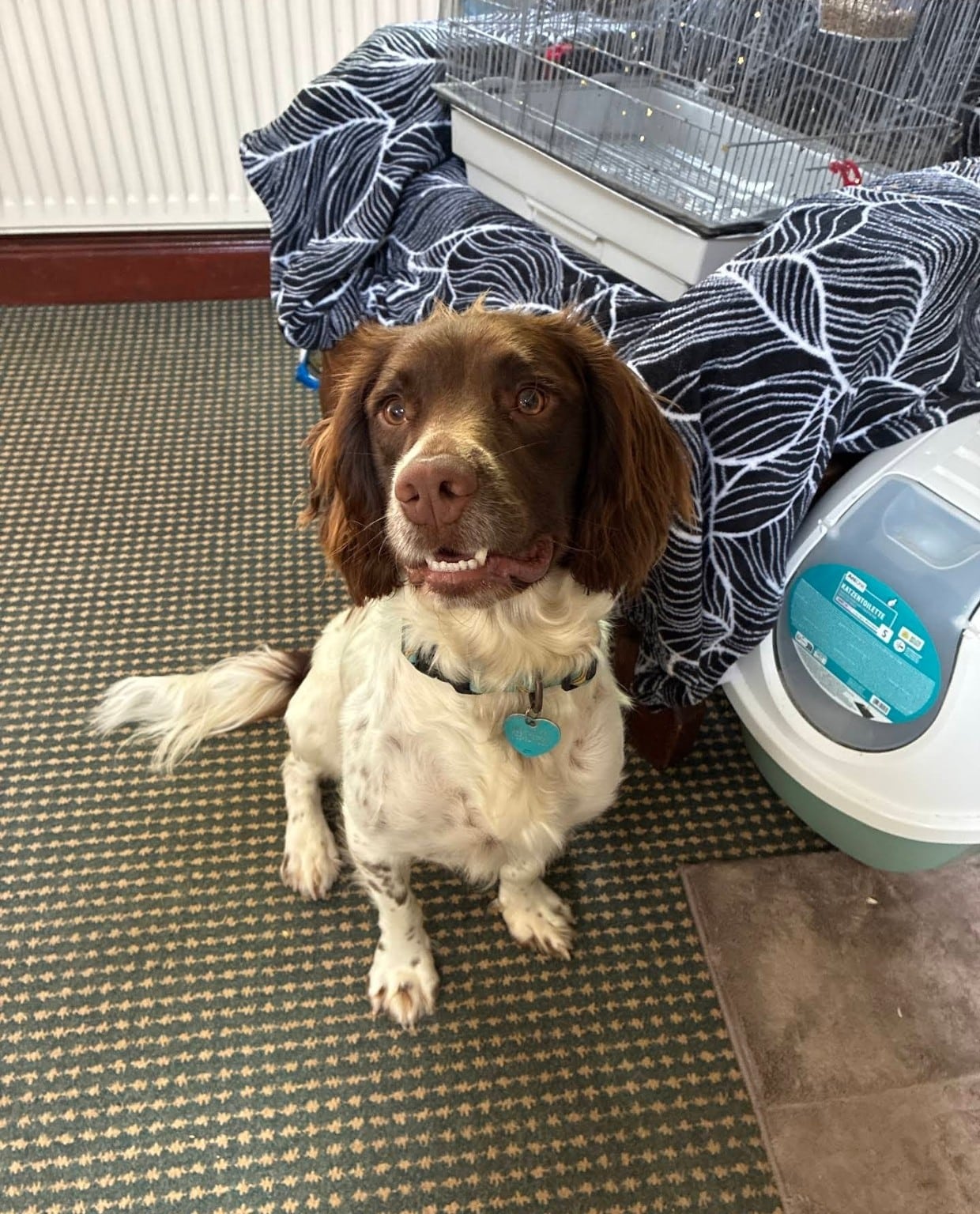
A young Springer Spaniel from County Limerick whose owners became deeply concerned when his fixation on shadows and reflections began taking over daily life.
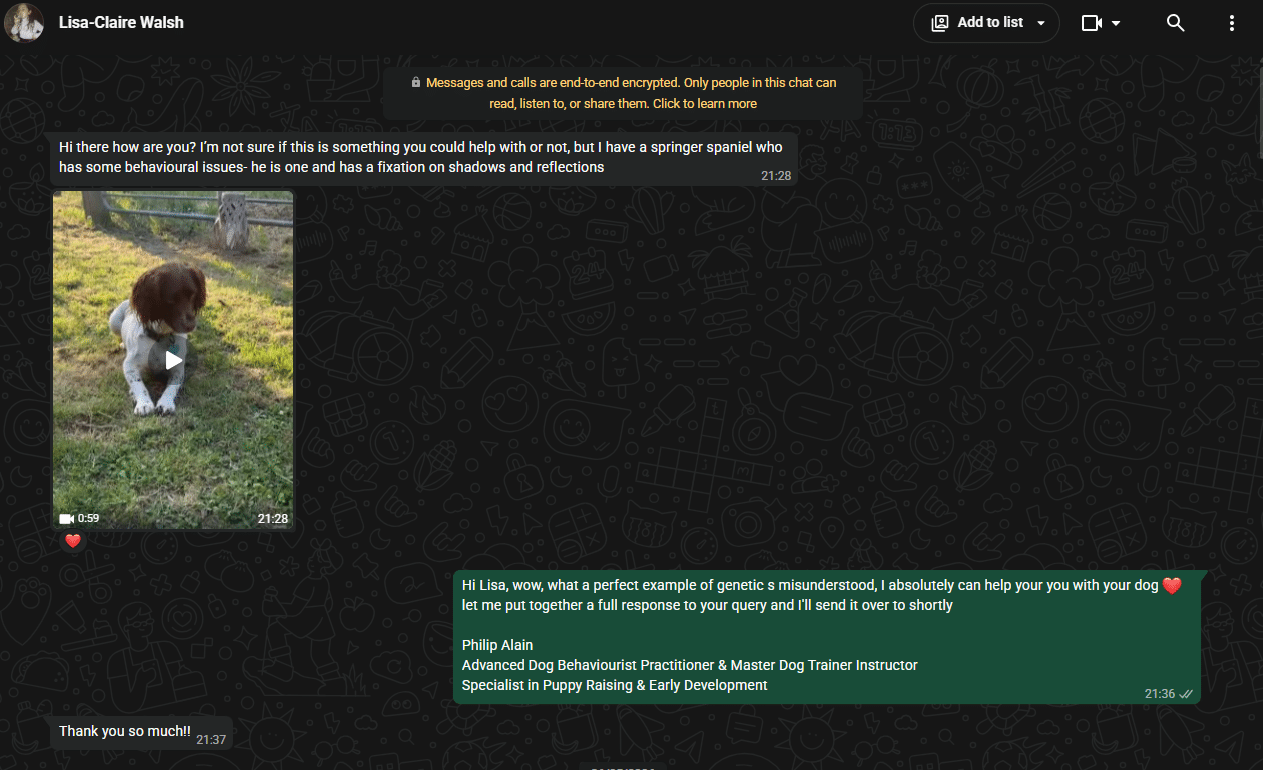
The first message from Joey’s owner explained the concern clearly: a one-year-old Springer Spaniel with behavioural issues and a fixation on shadows and reflections.
With a case like Joey’s, the visible behaviour is only part of the story. The shadow chasing was the symptom, but the dog behind the behaviour needed to be understood properly.
Joey is a young Springer Spaniel with energy, sensitivity, focus and working-dog traits that mattered in the assessment.
Shadow chasing can become powerful because the dog learns to scan, anticipate, chase and repeat the behaviour.
The work needed to consider Joey’s arousal levels, ability to disengage and where his focus was being committed.
The goal was to strengthen Joey’s connection with his owners so he could be guided into healthier behaviour patterns.
This was not about a staged training hall. The behaviour was happening in real life, in the dog’s normal environment.
Before developing a training plan, it was important to understand Joey as an individual dog. His genetics, working background, environment, daily routines and behavioural patterns all formed part of the assessment.
Understanding the dog behind the behaviour is often the first step towards meaningful progress.
During the visit, the work moved away from simply trying to stop the fixation and towards building a new direction for Joey’s focus: connection, engagement, structure and clearer owner communication.
This work was not about suppressing Joey or simply trying to stop him looking at shadows. The aim was to use his natural hunt drive, hunting instinct and working-dog focus in a controlled and productive way.
The dopamine box is an approach I use from detection-style training and tracking development. Food is placed into a controlled search box so the dog starts to hunt with his nose, search with purpose and commit his focus to the task.
For dogs like Joey, the goal is to switch obsessive scanning into purposeful hunting, scent work, engagement and confidence. This can also help dogs with environmental nervousness and obsessive behaviours by giving the dog a healthier job to focus on.
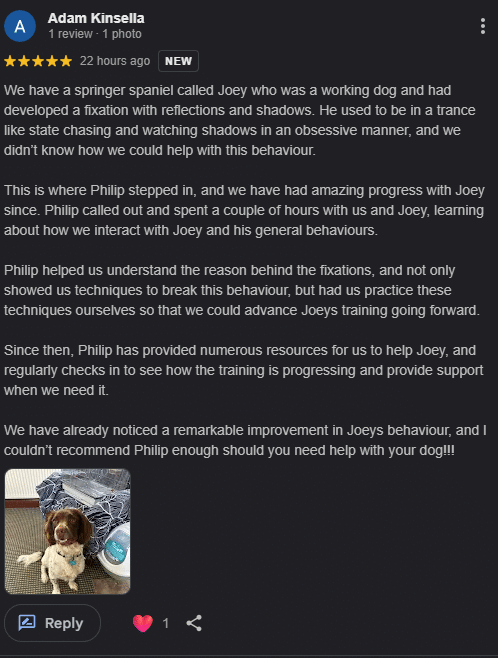
Joey’s owner later shared a detailed five-star review explaining the original problem, the work carried out, the follow-up support and the remarkable improvement they had already noticed.
Joey’s progress did not happen because of one visit alone. His owners put the work in afterwards, followed through, sent updates and continued developing Joey’s focus, engagement and ability to disengage from the fixation.
Joey's journey was never about stopping a dog from looking at shadows.
It was about understanding the dog behind the behaviour.
Through assessment, owner education, engagement work, structured development and continued follow-through, Joey's owners learned how to redirect his focus, build clearer communication and create a more productive outlet for his working-dog instincts.
Every dog is different, but Joey's story is a reminder that behaviour often begins to change when owners understand what the dog actually needs.
If your dog is struggling with shadow chasing, light fixation, anxiety, reactivity, over-arousal, nervousness or unusual behaviour patterns, Clare Dog Training Ireland provides one-to-one in-home behaviour support throughout Ireland.