
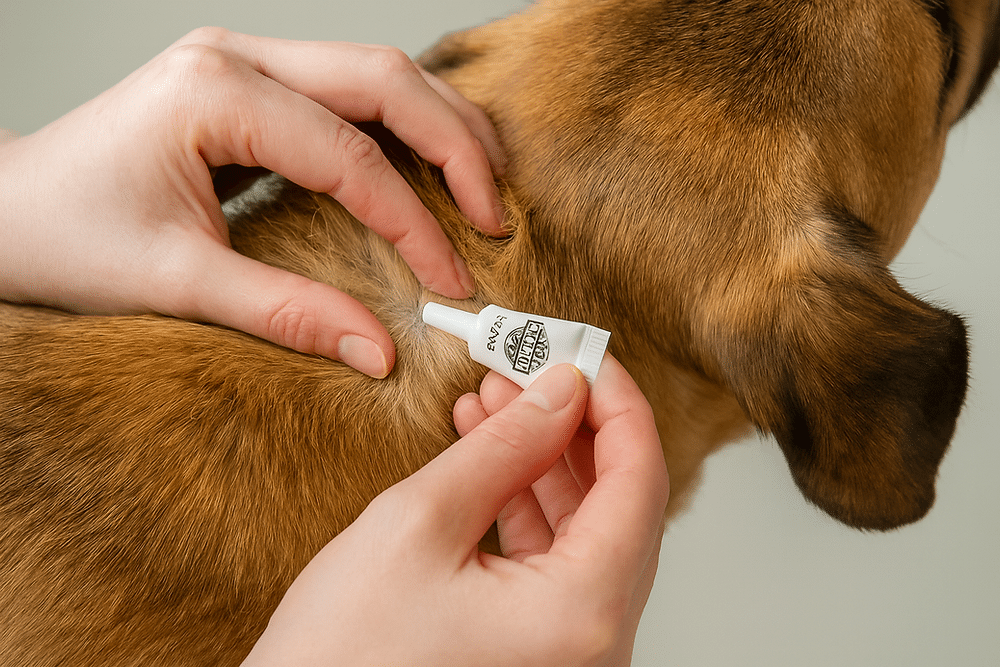
Why New Veterinary Guidance Is Raising Bigger Questions About Dogs, Chemical Exposure, and the Modern Pet Industry
For years, flea and tick treatment became one of the most routine parts of modern dog ownership.
Monthly applications.
Automatic prevention.
Repeat treatment schedules.
Very few owners questioned it.
But across the UK and wider veterinary sector, that conversation is beginning to change rapidly.
New guidance issued through the veterinary industry surrounding flea and tick treatments has reopened growing concern over chemical exposure, environmental contamination, and how modern dogs are increasingly managed through routine pharmaceutical prevention systems without many owners fully understanding the wider implications.
And suddenly, what once appeared to be a simple monthly treatment is becoming part of a much bigger debate.
Because this is no longer just about fleas.
It is about dogs, waterways, environmental contamination, modern veterinary culture, preventative treatment systems, and the growing commercialisation of the pet industry itself.
How Flea Treatment Became Automatic
Over the last two decades, preventative flea and tick treatment became deeply embedded into normal dog ownership across Ireland, the UK, Europe, and North America.
Many owners now apply treatments automatically every month regardless of season, exposure level, environment, or whether fleas are even present.
The process became routine.
Dog owners were increasingly conditioned to believe that constant chemical prevention represented responsible ownership, while very little wider public discussion took place around long-term environmental exposure or how these compounds behave once they leave the dog itself.
That is now beginning to change.
Because the chemicals used in many common flea and tick treatments are no longer being discussed purely through the lens of parasite control.
They are now being examined through the lens of environmental impact.
Why Environmental Authorities Are Concerned
Veterinary and environmental authorities across the UK have raised concern surrounding insecticidal compounds commonly used in flea and tick products, particularly substances such as fipronil and imidacloprid.
These chemicals are highly effective at killing fleas and ticks.
But they are also now increasingly being detected within rivers, streams, waterways, and wider aquatic environments.
That matters because these compounds do not simply disappear once applied to the dog.
They can enter water systems through:
- washing
- rainfall runoff
- wastewater
- contact transfer
- and dogs swimming shortly after treatment
Environmental monitoring has already linked these substances to harm affecting aquatic insects and parts of wider freshwater ecosystems.
And once environmental contamination begins affecting insect populations, the consequences can move far beyond the water itself.
This is why veterinary guidance surrounding swimming restrictions and treatment handling is now receiving far greater attention.
Because the issue is no longer theoretical.
Dogs Sit at the Centre of a Much Bigger System
The modern dog industry has evolved into one of the largest commercial sectors in animal care worldwide.
Preventative treatments, supplements, prescription diets, wearable technology, behavioural products, insurance systems, and subscription-based health models now form a massive global market surrounding companion animals.
And flea treatment sits directly inside that system.
For many owners, monthly treatment became so normalised that it stopped feeling like medication altogether.
But these products are not harmless cosmetic applications.
They are powerful insecticidal compounds designed specifically to affect living organisms.
That does not mean they should never be used.
Far from it.
Fleas and ticks absolutely present legitimate health concerns for dogs. Tick-borne disease, parasite infestation, allergic dermatitis, skin complications, and secondary infections remain serious veterinary issues.
But the growing concern now centres around balance.
Because the conversation is slowly shifting from:
“Should parasite control exist?”
to:
“How much routine chemical exposure is actually necessary for every dog, in every environment, all year round?”
And that is a very different discussion.
The Problem With Automatic Prevention Culture
One of the biggest concerns quietly emerging within parts of the veterinary and canine world is the rise of automatic prevention culture.
Modern dog ownership increasingly operates through permanent prevention systems:
- constant parasite prevention
- constant behavioural management
- constant supplementation
- constant product dependency
- constant treatment schedules
The result is that many owners stop assessing the individual dog, the actual environment, and the real level of risk involved.
Instead, treatment becomes automatic.
Repeat the schedule.
Continue indefinitely.
Do not question it.
That model may suit commercial systems extremely well.
But animal care should never become purely automatic.
Because dogs are individuals.
Environments differ.
Exposure levels differ.
Risk levels differ.
And responsible veterinary care should always include professional judgement, balance, and proper assessment rather than routine repetition alone.
The Wider Veterinary Industry Is Now Under Pressure
This issue also reflects something larger happening across modern veterinary medicine itself.
Public scrutiny surrounding pharmaceuticals, environmental contamination, animal welfare, and preventative treatment culture is increasing rapidly.
Owners are asking more questions.
Environmental groups are asking more questions.
Veterinary authorities are asking more questions.
And increasingly, the wider public is beginning to realise that modern pet care systems do not operate separately from wider environmental systems.
What affects dogs can also affect waterways.
What enters rivers can affect ecosystems.
And what becomes normal within the pet industry can eventually create consequences far beyond the household itself.
That is why this issue is attracting such serious attention.
Because it no longer sits only within veterinary medicine.
It now sits within environmental policy, public awareness, animal welfare, and the future direction of modern pet ownership altogether.
Balance Matters More Than Ideology
None of this means dogs should be left unprotected from parasites.
That would be irresponsible.
But equally, the growing environmental evidence means the issue can no longer be dismissed as harmless routine maintenance either.
The answer is unlikely to exist at either extreme.
Dogs still require proper veterinary care.
Parasite prevention still matters.
Environmental responsibility also matters.
And the future of veterinary guidance will increasingly need to balance all three realities together.
That is the real issue emerging now.
Not panic.
Not ideology.
Balance.
Conclusion
The growing debate surrounding flea and tick treatment is exposing something much larger within the modern dog world.
For years, routine chemical prevention became embedded into everyday ownership without many owners ever questioning the wider environmental or biological consequences involved.
Now that conversation is beginning to shift.
Because once waterways, ecosystems, veterinary oversight, chemical exposure, and canine welfare all become connected within the same discussion, flea treatment stops being a small issue.
It becomes part of a much bigger question about the future of modern pet ownership itself.
And increasingly, both dog owners and veterinary authorities are being forced to confront that reality.
Philip Alain
The Canine Report