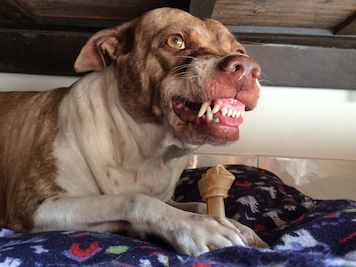
In the modern pet dog world, a growing number of normal canine behaviours are being reframed as “behavioural problems”. Aggression. Reactivity. Resource guarding. Nervousness. Hypervigilance. “Dominance.” Even a dog refusing handling, refusing strangers, or struggling with confinement is increasingly described as abnormal — as if the dog is malfunctioning inside a system that humans designed, and humans control.
This is a major cultural shift. Not because dogs have suddenly changed, but because expectations have.
The global reality: most dogs do not live like pets
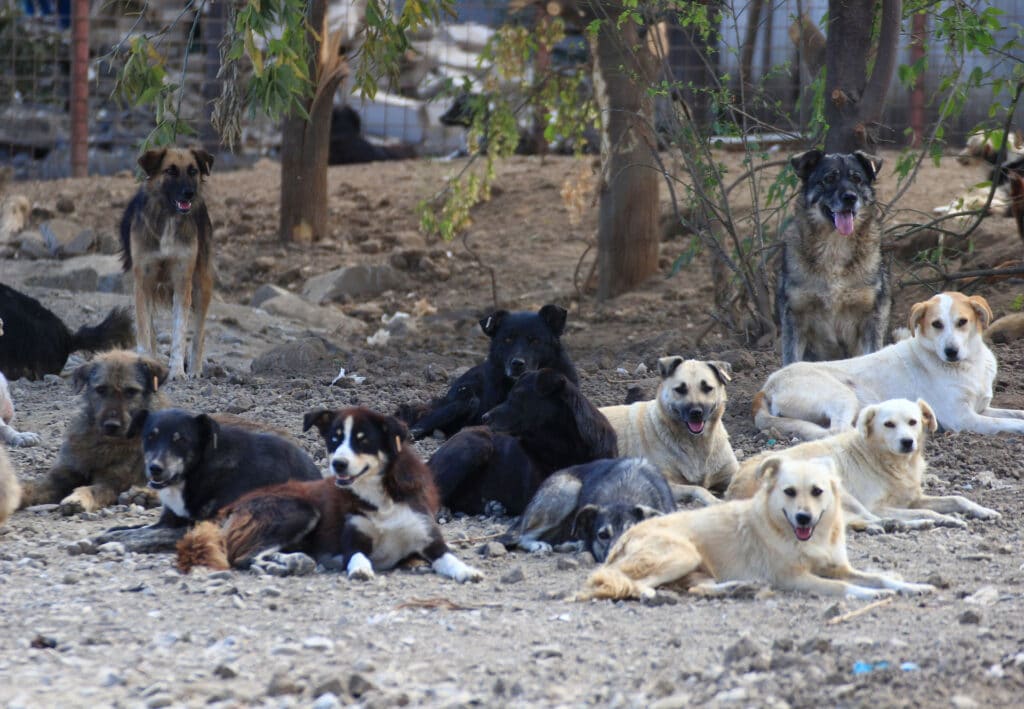
Estimates used in international dog-population management literature place the global dog population at roughly 700–950 million, and consistently report that most dogs are free-roaming in some form — village dogs, community dogs, street dogs, semi-owned dogs, and unowned dogs living alongside human settlements.
That matters, because it immediately reframes what “normal” looks like for a dog as a species:
In free-roaming contexts, the behaviours we label in pet dogs are often functional. They are survival behaviours in a fluid environment. Territoriality. Resource defence. Threat assessment. Avoidance. Escalation when pressured. Social conflict. These are not moral issues — they are biological and social strategies.
The controlled pet environment creates the conflict
A pet dog is expected to live inside an extremely artificial behavioural contract:
confined indoors for long periods
limited outlets for natural roaming, scavenging, social negotiation, and avoidance
frequent forced proximity to strangers, children, visitors, other dogs, and unpredictable modern environments
human handling expectations that ignore consent signals and stress thresholds
a lifestyle built around convenience rather than species-typical needs
When that dog shows natural self-protective behaviour inside an unnatural system, the dog gets labelled — not the system.
The language problem: “behavioural problems” as branding
Once behaviour is labelled as a “problem”, it becomes a commodity. The label creates a market: assessments, programmes, products, protocols, supplements, gadgets, and sometimes medication pathways.
This does not mean every intervention is wrong or unethical. It means the framing matters. If normal canine survival behaviour is routinely sold as abnormal pathology, the dog becomes the “defective unit” instead of the environment being questioned.
What a real behaviourist is supposed to do
A competent canine behaviourist does not begin with a label. The role is closer to a mediator and systems analyst between species — interpreting behaviour in biological context rather than judging it against human expectation.
The first task is separating normal canine behaviour from maladaptive behaviour. That requires examining the environment, the predictability of daily life, the dog’s sensory experience, and the pressures placed on the animal.
A dog is not navigating the world through language or abstract reasoning. It is navigating through hearing, scent, movement detection, spatial awareness, memory, and genetic predisposition. The dog’s DNA determines thresholds for caution, pursuit, defence, recovery, and tolerance. Every response is the dog attempting to manage safety from moment to moment.
If a dog reacts, the reaction is information. The dog is communicating honestly based on perception — not disobeying, not being spiteful, and not attempting to dominate a household structure. Often the behaviour reflects confusion, unpredictability, or pressure exceeding coping ability rather than a disorder.
The behaviourist’s responsibility is therefore to interpret what the dog is responding to, what the dog believes is happening, and whether the environment provides clarity. Where clarity does not exist, behaviour escalates because the animal is trying to survive within uncertainty.
In that sense, the behaviourist does not “fix behaviour”. The behaviourist translates between human expectation and canine perception.
Why this matters now
The more pet dog ownership expands, the more society normalises a single lifestyle as “the correct one” for dogs — even though global dog ecology shows that dogs have always adapted to many models of living. Most of the world’s dogs are not raised in tightly confined domestic systems, yet they still function socially in their communities.
Across that wider population, behaviours commonly labelled as problematic in pet dogs — guarding, avoidance, defensive display, vigilance — are normal adaptive strategies that allow dogs to coexist and survive. The difference is not the behaviour; the difference is the environment interpreting it.
If we build a lifestyle that conflicts with canine behavioural biology, and then label the dog for reacting to it, the dog becomes the scapegoat for human design decisions.
The real question pet owners should be asking
Not: “What label does my dog have?”
But: “What is my dog trying to achieve or avoid — and what in this environment is pushing the behaviour?”
Because in many cases, the dog is not “showing a disorder”. The dog is showing clarity — and the system around the dog is what lacks it.
Philip Alain
The Canine Report