The rising demand for therapy and assistance dogs has driven increased interest not only in traditional breeds, but also in designer crosses commonly marketed as ideal candidates for emotional support and therapeutic work. Labrador Retrievers, Golden Retrievers, Poodles, and their various crosses — including Labradoodles, Goldendoodles, and Cockapoos — are frequently presented as universally suitable for these roles.
The reality is more complex. Suitability for therapy work is not guaranteed by breed labels, crosses, or appearance. Genetics, selection history, and temperament compatibility remain decisive factors.
Why Certain Breeds Appear Frequently in Therapy Work
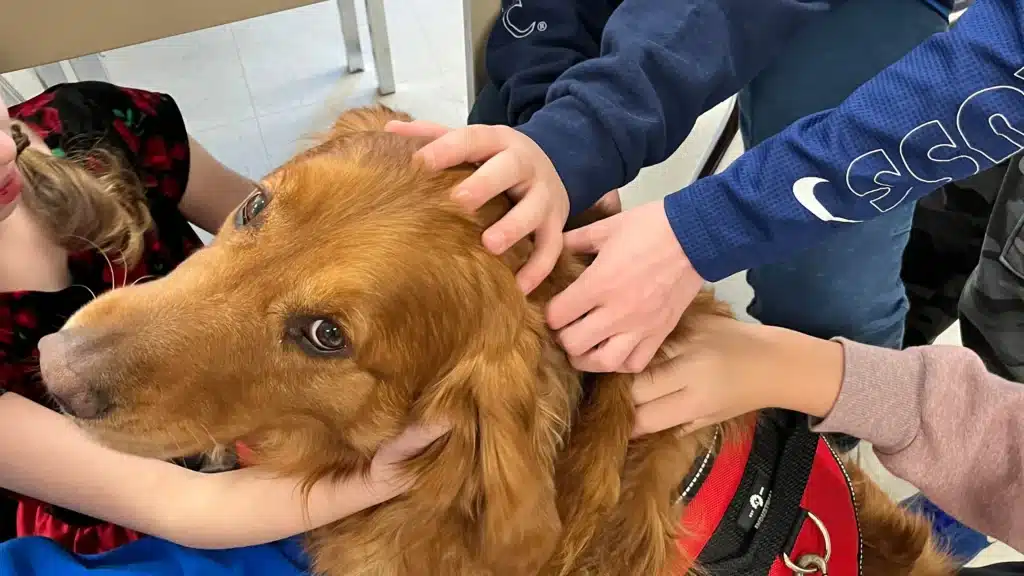
Labrador Retrievers and Golden Retrievers are commonly used in therapy and assistance roles because of long-standing selection for cooperation with humans, tolerance of handling, and emotional steadiness. Standard Poodles are also represented due to their intelligence, adaptability, and capacity for structured work when bred with stability in mind.
These breeds did not become common in therapy settings by chance. They were shaped over generations for predictable temperament traits that align with the demands of emotionally intensive environments.
However, breed presence does not equal breed guarantee. Within each of these breeds exists wide variation, particularly where breeding prioritises appearance, availability, or market demand over behavioural consistency.
The Assumption That Crossbreeding Improves Suitability
Crossbreeds such as Labradoodles, Goldendoodles, and Cockapoos are often assumed to combine the “best of both worlds.” In practice, this assumption is unreliable.
Crossbreeding does not blend traits evenly. It introduces genetic variability, not balance. When two dogs are crossed, the offspring may inherit:
high arousal from one parent
sensitivity or reactivity from the other
incompatible stress thresholds
unpredictable combinations of drive, resilience, and emotional regulation
This is particularly relevant when working-line dogs, high-drive spaniels, or poorly selected breeding stock are used in crosses intended for therapy or assistance roles.
Compatibility Matters More Than Labels
Genetic compatibility is critical. Crossing two dogs with similar working backgrounds, drive levels, or unresolved temperament issues does not dilute those traits — it can compound them.
For example:
working-line retrievers bred for high intensity and persistence may struggle in therapy settings
spaniels selected for hunting or high responsiveness may bring vigilance and sensitivity
poodles from lines selected for performance or speed may contribute arousal rather than calm
When these traits combine without careful selection, the result can be a dog that is intelligent and affectionate but emotionally unsuitable for therapy environments.
This does not reflect poor training. It reflects genetic mismatch.
Why Some Crosses Struggle in Therapy Roles
Many dogs presented for therapy work fail not because they are “difficult” dogs, but because their genetic profile is incompatible with sustained emotional labour. Common challenges include:
difficulty remaining neutral around human emotion
over-attachment or separation distress
sensitivity to noise, movement, or touch
low frustration tolerance
delayed stress recovery
These traits are often misinterpreted as training issues or confidence gaps, when in reality they are expressions of inherited temperament.
Development Cannot Override Genetics
Early development and exposure matter, but they cannot override core temperament. Puppies raised with excellent socialisation may still struggle later if their genetic baseline does not support emotional stability under pressure.
This is why therapy suitability cannot be predicted reliably in puppies, and why crosses marketed as “ideal therapy dogs” must be assessed with the same caution as any purebred.
The Risk of Demand-Driven Breeding
As demand for therapy dogs increases, breeding decisions are increasingly shaped by market appeal rather than long-term suitability. Crossbreeds are often promoted as universally adaptable without evidence that their lines have been selected for emotional resilience.
This trend increases the risk of dogs being placed into roles they cannot sustain — not because of poor care, but because selection ignored compatibility.
Suitability Is Earned, Not Assumed
Therapy work is not a reward for good behaviour or good intentions. It is a role that must align with the dog’s genetic makeup, temperament, and long-term wellbeing.
Crossbreeds can succeed in therapy roles — but only when selection is deliberate, conservative, and informed by temperament rather than appearance or branding.
The growing reliance on mixed breeds does not remove the responsibility to respect genetics. It increases it.
Philip Alain
The Canine Report