
The Canine Report — Nutrition, Behaviour & Industry Feature
Dog nutrition is one of the most talked-about topics among owners, trainers, and canine professionals in Ireland today. Despite increasing attention, many dog owners are still unsure about what exactly goes into their dog’s food, how ingredients affect digestion and behaviour, and whether long-term health is being supported by what ends up in the bowl each day.
As awareness grows around links between diet, physical health, and behavioural resilience, questions are emerging about traditional ultra-processed kibble, raw feeding, and a growing category of raw-inspired, nutrient-dense alternatives that aim to bridge the gap.
This article examines those options, explains key ingredients and fillers, and offers clarity on what matters for dogs in real homes.
The Limits of Ultra-Processed Dog Food
For decades, most dry dog food has been produced using high-temperature extrusion. This method allows for large-scale production of kibble that is shelf-stable, inexpensive, and convenient. However, extrusion also has consequences:
High-temperature processing: Heat can degrade some delicate nutrients and protein structures, requiring manufacturers to add synthetic vitamins and minerals after processing.
Refined carbohydrates and fillers: Ingredients such as high-glycemic grains or starches (corn, wheat, rice) may be inexpensive but can contribute to rapid blood sugar spikes and are less digestible for many dogs.
Low protein density: Many products are calibrated by carbohydrate percentage rather than whole protein content, which can leave dogs feeling undernourished despite eating full meals.
Additives and preservatives: Artificial colours, flavours, and some preservatives can be unnecessary in a biologically appropriate diet and may agitate sensitive digestive systems.
From a canine behaviour perspective, these characteristics matter because digestion and metabolism interact with energy levels, inflammatory responses, and overall biological balance. Food does not cause behavioural problems, but certain diets can exacerbate stress, reactivity, or poor recovery from arousal in predisposed dogs.
Raw Feeding: A Biologically Appropriate Standard
Raw feeding is often described as the closest modern equivalent to a dog’s ancestral diet. Dogs evolved as opportunistic carnivores with digestive systems capable of handling raw meat, bone, organ tissues, and natural fats. Advocates of raw diets highlight several nutritional advantages:
Whole animal proteins: Muscles, organs, and bones provide complete amino acid profiles necessary for tissue repair, immune function, and energy.
Natural fats: Essential fatty acids in raw sources support skin health, brain function, and hormonal balance.
Enzymes and micronutrients: Raw diets retain heat-sensitive vitamins and enzymes not present in processed foods.
However, raw feeding in practice presents real challenges for many households. These include hygiene, freezer space, defrosting routines, risk of cross-contamination, and the need for careful balancing of nutrients. Many owners find raw feeding impractical despite acknowledging its theoretical nutritional strengths.
The Middle Ground: Nutrient-Dense, Raw-Inspired Alternatives
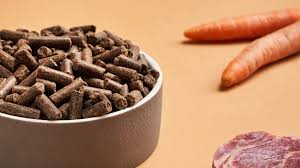
A growing category of dog food combines the best of both worlds: nutrient-dense, raw-inspired formulas that aim for biological suitability while offering practicality and hygiene benefits. These foods typically focus on:
High-quality animal proteins — real meat, fish, or poultry as primary ingredients rather than meat meals or by-products
Moderate fats from natural sources — balanced essential fatty acids without excessive saturated fat
Whole food carbohydrates — digestible sources like sweet potato or peas rather than refined grains
Functional fibres and prebiotics — to support gut health and microbial balance
Limited fillers and artificial additives — avoiding unnecessary thickeners, artificial colours, or flavour enhancers
Instead of extreme processing, these diets use gentle methods designed to preserve nutrient integrity. The result is food that feeds more like raw but handles more like kibble — without the complexities of freezing or defrosting.
Understanding Ingredients and Fillers
Here are the key components typically found in modern nutritionally balanced dog food, with a focus on their function:
Animal Protein (healthy)
Sources: chicken, beef, lamb, fish, turkey
Benefits: supplies essential amino acids, supports muscle maintenance, immune health, and energy
Animal Fat (healthy in balance)
Sources: fish oil, chicken fat, flaxseed
Benefits: omega-3 and omega-6 fatty acids for skin, coat, brain and inflammatory control
Whole Carbohydrates (moderate use)
Sweet potato, peas, brown rice
Benefits: digestible energy source, sustained blood sugar levels
Caution: over-reliance can contribute to weight gain in less active dogs
Fibres and Prebiotics (beneficial)
Beet pulp, chicory root, pumpkin fibre
Benefits: supports gut microbiome and stool quality
Fillers and Low-Value Additives (to be minimised)
Corn gluten meal, wheat middlings, soy
Impact: less digestible, can contribute to gas, bulky stools, and inconsistent energy
Best practice: diets aimed at nutrition minimise these ingredients
Vitamins and Minerals
Balanced either through whole foods or added as needed
Critical for metabolic functions, bone health, and cellular activity
What separates a high-quality diet from a mediocre one is not the absence of carbohydrates per se, but the quality of sources, the balance of nutrients, and the digestibility of the final food.
DARF and the Raw-Inspired Feeding Model
One example of a company moving toward raw-inspired, nutrient-dense feeding is DARF. Born from raw feeding roots, DARF’s nutritional philosophy centres on whole-food ingredients and biological appropriateness while offering formats that do not require freezing or raw handling routines.
DARF’s products aim to:
combine digestible, recognisable proteins
preserve nutrient integrity
avoid unnecessary synthetic bulking agents
offer a practical option for daily feeding
These qualities make raw-inspired diets a compelling choice for owners who want to balance biological nutrition with household practicality.
Nutrition and Behaviour: The Gut–Brain Connection
Increasingly, canine behaviour professionals recognise that diet plays a role in the wider physiological system that influences mood, stress response, and overall resilience. This relationship — sometimes referred to as the gut–brain connection — suggests that supportive nutrition can complement training and behaviour work by:
stabilising energy and blood sugar
reducing inflammation that may amplify reactivity
encouraging a balanced microbiome that supports calm internal signalling
While nutrition alone does not “cure” behaviour problems, diet can influence how well a dog adapts to training, environmental cues, and daily life challenges.
Practical Feeding for the Modern Owner
For many owners in Ireland, the ideal diet is not the extreme choice, but the informed choice — food that respects canine biology while fitting into daily routines without waste, mess, or logistical burden.
When choosing or evaluating dog food, owners are encouraged to consider:
ingredient quality over packaging claims
protein sources and proportions
real-food carbohydrates
minimal artificial additives
how food affects energy, digestion, and behaviour over time
This article offers clarity without oversimplifying a complex topic. It reflects current thinking in canine nutrition and behaviour, and is designed to help Irish dog owners make informed decisions that support both physical health and day-to-day behaviour.
The Canine Report
by Philip Alain