
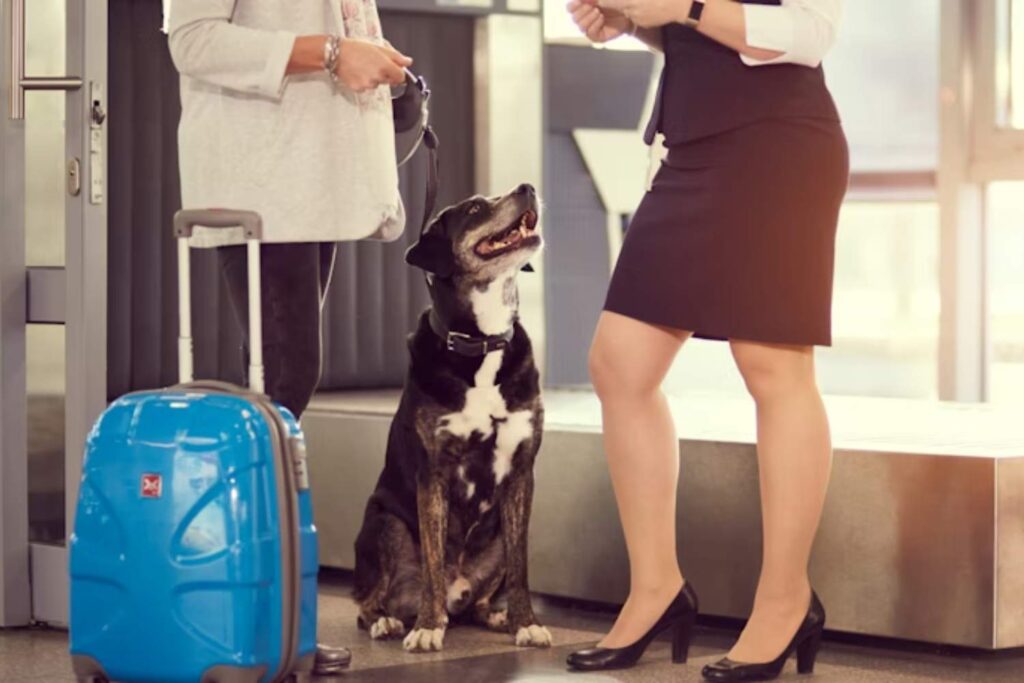
Every New Year’s Eve, skies across Germany erupt with fireworks as part of the traditional Silvester celebrations. While festive for many people, the loud explosions and sudden flashes can be deeply distressing for dogs, often triggering fear responses, panic behaviours, and escape attempts. For noise-sensitive animals, the night can be one of the most stressful of the entire year.
In response to growing concern for animal welfare, Paderborn/Lippstadt Airport in Germany took an unusual but thoughtful step by opening parts of its terminal on New Year’s Eve to dogs and their owners. The initiative, introduced specifically for the occasion, aimed to provide a calm, firework-free indoor environment where pets could be sheltered from the intense noise associated with private fireworks.
Fireworks are prohibited in and immediately around airport grounds for aviation safety reasons. As a result, airport environments are often significantly quieter than surrounding residential areas during New Year celebrations. By keeping its terminal accessible throughout the evening and night, Paderborn/Lippstadt Airport offered dog owners a practical refuge during one of the most challenging nights of the year for animals affected by sound sensitivity.
To ensure safety and calm within the terminal, basic guidelines were put in place. Dogs were required to be kept on a leash, remain under their owner’s control at all times, and meet standard health and vaccination requirements. The aim was not to create a festive gathering, but a quiet, controlled space prioritising canine welfare.
While this initiative was specific to Paderborn/Lippstadt Airport and not a nationwide policy across Germany, it reflects a broader shift in public awareness around the impact of fireworks on animals. In recent years, discussions across the country have increasingly focused on the consequences of loud pyrotechnics for pets, wildlife, emergency services, and the wider environment.
For dog owners, the priority is becoming clear: reducing fear, stress, and the risk of injury caused by sudden, uncontrollable noise. Whether through innovative initiatives such as this, choosing firework-restricted areas, or planning quieter alternatives away from residential celebrations, proactive decision-making plays a crucial role in protecting animal wellbeing.
Although airports are not universally designated as sanctuaries for dogs, the example set by Paderborn/Lippstadt Airport highlights how public spaces can be adapted thoughtfully and responsibly. As awareness continues to grow, such measures may encourage wider conversations about how celebrations can coexist with compassion for animals.
For many dogs and their owners, this initiative represented more than a quiet place to wait out the night — it signalled a growing recognition that festivities should never come at the expense of animal welfare.
The Canine Report
by Philip Alain